Salt marshes are an incredibly important, though often overlooked part of marine and coastal ecosystems. They provide many ecosystem services, such as carbon sequestration, water filtration through the removal of excess nutrients, and flooding reduction. They also provide habitat for many threatened organisms, such as saltmarsh sparrows. As sea level rise rates begin to increase more rapidly, many salt marshes are struggling to remain above water. If a salt marsh fails to accrete sediment at a rate equal to, or greater than sea level rise, it will drown. One proposed solution to reduce salt marsh drowning are thin-layer sediment placement projects. Thin layer placement (TLP), is the practice of spraying fine sediments, like silt and clay, onto the top of salt marshes to mimic vertical accretion The idea behind TLP is that by depositing large volumes of sediment on top of an eroding, but otherwise healthy marsh, the marsh will be at a lower risk for drowning, and marsh plants will be healthier due to the influx of nutrients.
Even though TLP projects sound perfect on paper, they are highly debated as a reliable restoration method. Sediment is locally dredged and filtered before being deposited onto the target marsh. The spraying itself is also fairly expensive, and securing the funding is a long and tedious process. Besides the expense, one of the primary concerns is the short-term health of the marsh. In the long term, vegetation has been shown to increase in abundance and range. However, covering a marsh with sediment harms organisms in the short-term. Fiddler crab burrows are partially covered over, birds that nest in marshes may lose their nests, and plants struggle to receive proper sunlight, or can be knocked over with the weight of the sediment. It is often necessary for new seedlings to be planted in the marsh after TLP to bolster struggling plant populations.
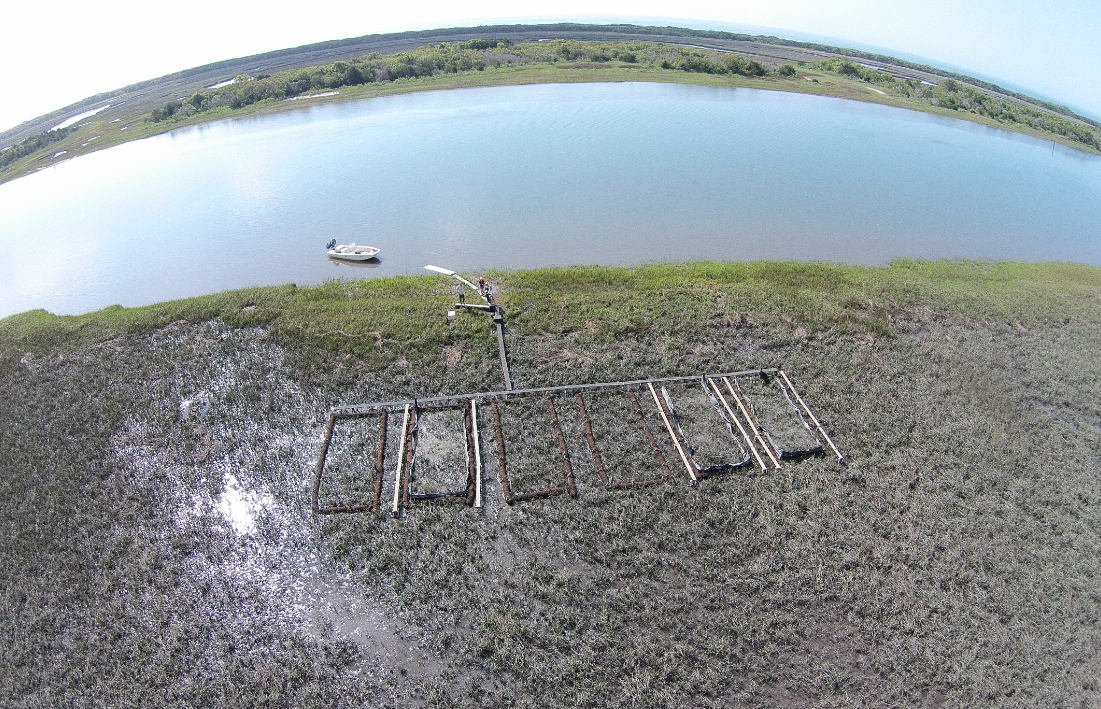
Experimental plots used for TLP testing in a marsh that recently underwent sediment place. Photo credit: NOAA
One of the main cited benefits of TLP is increased accretion rates in salt marshes. However, some marshes undergo a process called self-cannibalism. This is when certain parts of the marsh begin to erode, and instead of the sediment from those portions exiting the marsh, they instead flow back into other areas, making it seem like accretion rates are higher when the marsh is actually shrinking horizontally. It is possible that accretion rates are being falsely inflated with sediment placement projects, as there is an increase in self cannibalism due to the destabilization of certain sections where plants died off due to the initial sediment placement.
There are not currently enough long term studies on thin layer placement projects, primarily because the practice just hasn’t been around long enough. Many preliminary studies show promising results, but implementing TLP more widely without further research is simply too risky of a strategy.